God's Favourite Joke

What I was listening to while writing this.
Let us talk about the coward.
Not the ones who run from war. Not the ones who swallow their words at the dinner table or look away when something true is happening in front of them. No. I mean the one above all of that. The one who sits — if sitting is what formlessness does — behind the curtain of every prayer ever whispered, every candle ever lit, every broken human being who pressed their forehead to the cold floor and said please into the dark and heard nothing back but the sound of their own breath.
That coward.
The one who made love and then unmade it. The one who handed you something irreplaceable with both hands and then reached back and took it in the night like a thief who also wrote the law.
I want to talk about him. I want to drag him into the light he supposedly invented and ask him — look at what you did. Look at the specific wreckage of your particular cruelty. Don't hide behind mystery. Don't wrap yourself in the language of purpose and plan and divine architecture. Stand here. In this room. In this silence that used to have a voice in it. In this space that still holds the shape of someone you removed like a tooth from a living mouth — cleanly, completely, leaving nothing but the ache of where something used to be.
Stand here and tell me this was love.
The believers will come now with their soft eyes and their softer words. He had a plan. As if plans require this. As if whatever blueprint exists in whatever heaven they've constructed in their desperate need for the universe to be parented — as if that blueprint had a line that read: take everything from him. Take the specific warmth of her. Take the sound. Take the weight of her presence in a room. Leave him the furniture.
They will say He works in mysterious ways and I will say — yes. Yes he does. The way a coward works. The way someone who cannot be confronted works. Mysteriously. Conveniently. Behind the veil of the unknowable, where no accusation can land, where no grief can find the door, where you cannot grab him by the collar and say look at me, look at what you've done, look at what your love costs.
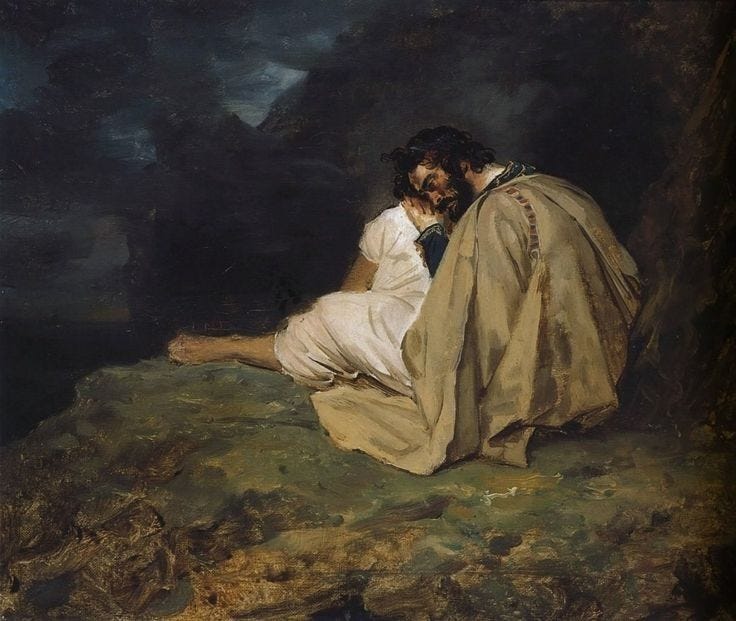
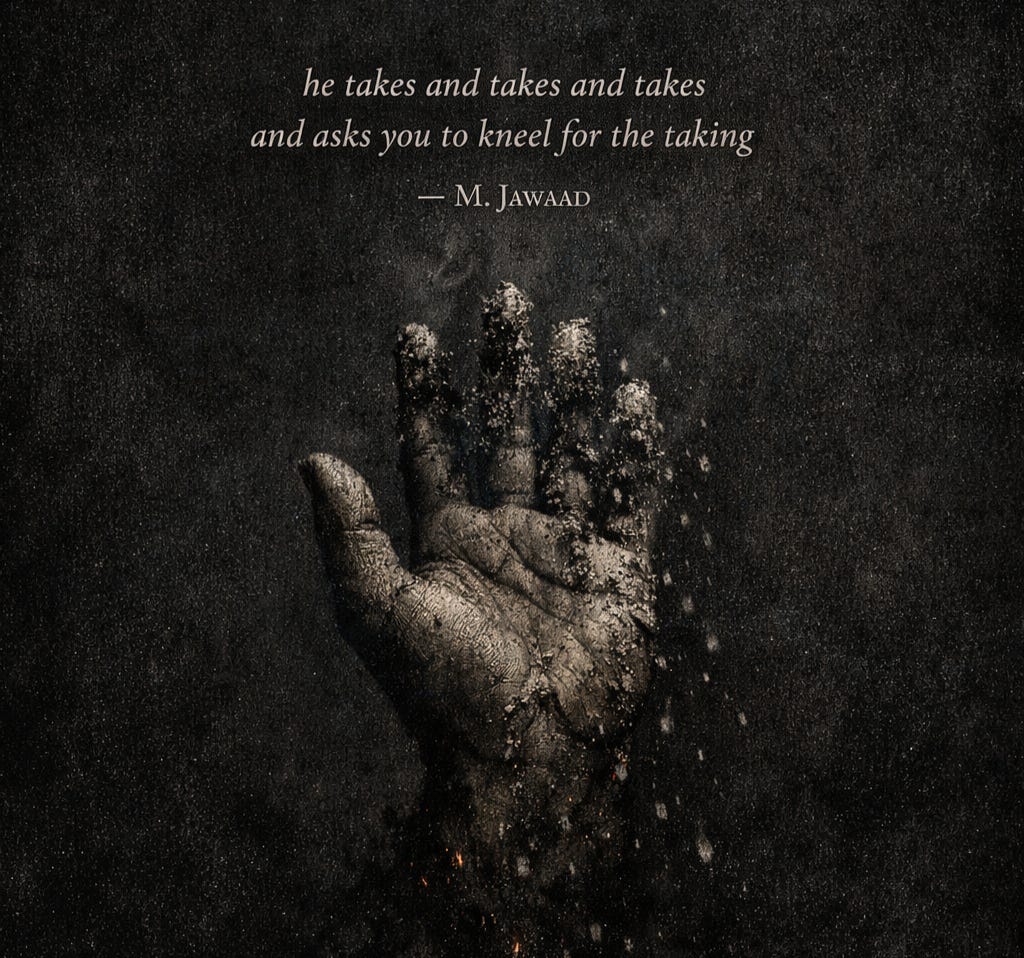
A coward's love. That's what this is. The love of someone who takes and takes and takes and then asks you — asks you — to be grateful for the taking. To find the l mmesson in the loss. To mine your own devastation for proof of his goodness.
What goodness.
What extraordinary, breathtaking, specific cruelty dressed in the robes of goodness.
And you — the believers — you kneel to this.
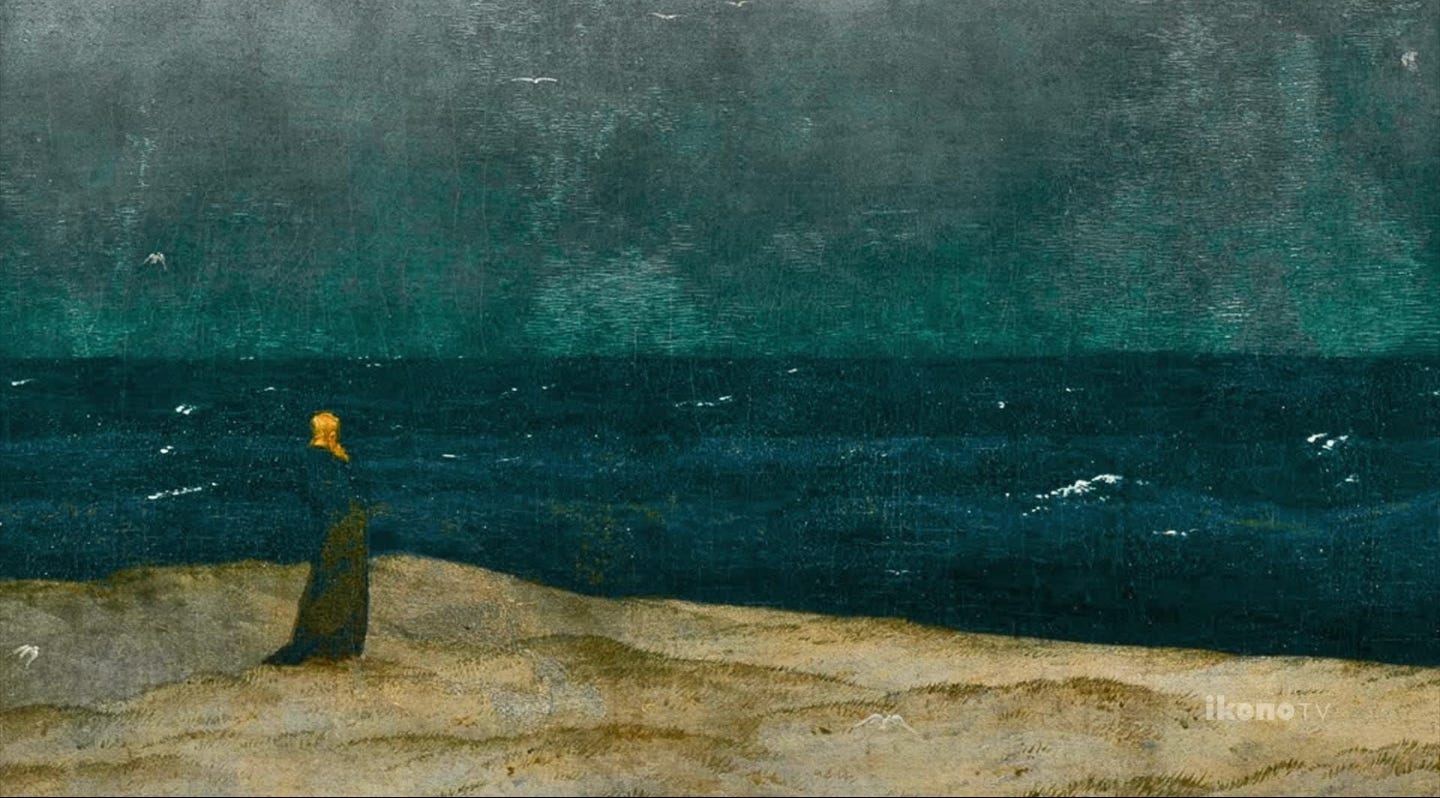
Caspar David Friedrich — Monk by the Sea
You press your foreheads to the ground for this. You fast and you pray and you prostrate yourselves before the one who looked at everything you loved and decided it was his to reclaim, his to redistribute, his to pull from your chest while you were still breathing and still hoping and still building your small ridiculous human life around something real — and you call this devotion.
I call it the longest abusive relationship in the history of consciousness.
He hurts you. You forgive him. He takes something irreplaceable. You thank him. You explain his behaviour to others. You defend him at dinner tables when someone like me opens their mouth. You say you just don't understand his love with the precise intonation of someone who has confused surviving a thing with being chosen by it.
You were not chosen.
You were just not dead yet.
Here is the theology they don't put in the books:
God is a man who loved you enough to show you what love was and then took it so you would spend the rest of your life in the specific hell of knowing exactly what you're missing. God is the architect of your before and your after. The one who drew the line between who you were when you were loved and who you are now in the ruin of it. God looked at the most tender thing in your life, the thing that made you soft in all the places the world had made you hard, the thing that made you believe — not in him, but in the possibility of warmth, in the radical and quiet miracle of being known by another human being — and he took it.
And he called it a plan.
And he called it mercy.
And he asked you to call it that too.
I won't.
I will not genuflect before cruelty because it is old. I will not soften my contempt because it makes the believers uncomfortable. I will not dress my grief in gratitude to make God look better in the retelling. He doesn't deserve the editing. He doesn't deserve the careful language. He doesn't deserve the benefit of the doubt that everyone rushes to extend to him the moment you suggest that maybe — maybe — a god who takes the people you love in the middle of the night without warning, without reason, without anything resembling the mercy he supposedly embodies — maybe that god is not good.
Maybe that god is just powerful.
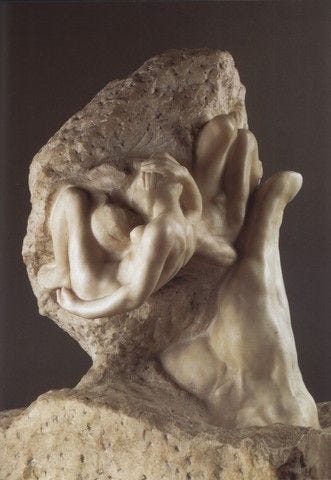
And we have spent centuries confusing the two.
So here. Here is my prayer. My one prayer, the only one I have left:
I see you. Behind your mystery and your plan and your ten thousand years of being called holy by people too afraid to call you what you are. I see the coward in the curtain. I see the hand that took. I see you watching from wherever formless things watch from while the people you supposedly love learn to breathe around the shape of what you removed.
I see you.
And I am not kneeling.
Holy guacamole - this is excellent. Controversial in all the right ways. Hold that fierce pen tight, between praying hands.
https://damienssoul.substack.com/p/that-church?r=78vcb7&utm_medium=ios